
Introduction: Why Crisis Management is Non-Negotiable
In the fast-paced world of tech and fintech startups, innovation moves quickly—but so do crises. A single data breach, failed product launch, or regulatory misstep can spiral into a full-blown brand disaster. That’s why having a solid crisis management strategy isn’t optional—it’s mission-critical.
Whether you’re a budding SaaS startup or an established fintech player, your ability to manage a crisis can define the future of your business.
What is Crisis Management?
Crisis management refers to the strategic process of preparing for, responding to, and recovering from unexpected events that can harm a company’s reputation, finances, or operations.
In the context of tech and fintech startups, these crises often involve:
- Data breaches and cybersecurity attacks
- Technical failures or app downtime
- Regulatory issues and compliance gaps
- Negative media coverage
- Public backlash on social media
Co-founder or leadership scandals
Common Crises Faced by Tech & Fintech Startups
Let’s look at a few real-world examples to understand the stakes:
- Data Breach (e.g., Paytm or MobiKwik) – Exposed user data led to trust issues, media coverage, and legal scrutiny.
- App Downtime (e.g., Zerodha) – Tech glitches during peak trading hours cause user frustration and reputation damage.
- Regulatory Penalties (e.g., crypto startups) – Non-compliance with RBI guidelines has led to business suspensions or bans.
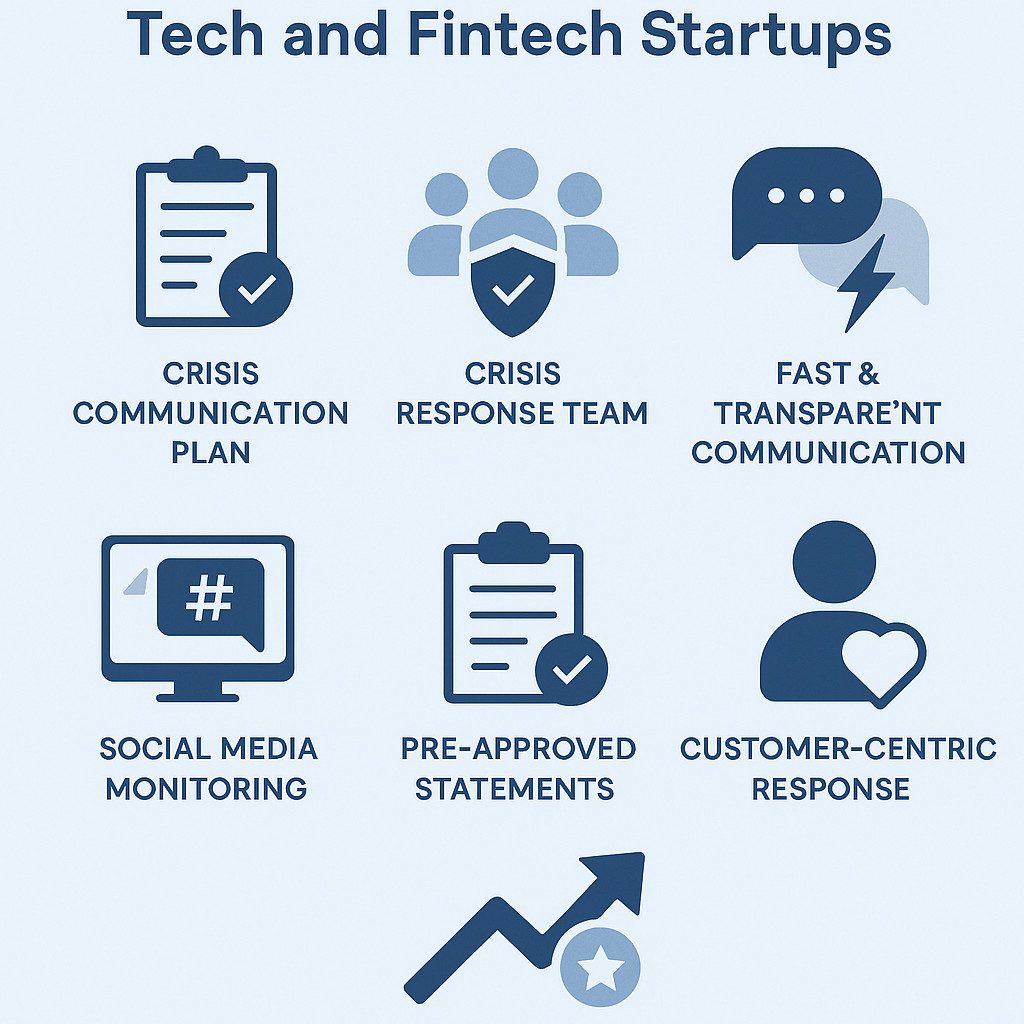
Best Crisis Management Strategies for Tech and Fintech Startups
Now, let’s dive into the most effective crisis management strategies every startup must follow:
- Create a Crisis Communication Plan in Advance
Don’t wait for a disaster to happen. Build a detailed plan that outlines:
- Crisis categories and possible scenarios
- Internal team responsibilities
- Key messaging frameworks
- Communication channels to be used (social media, press, email)
- Contact list of stakeholders, media, legal counsel
Pro Tip: Update your plan every 6 months as your startup grows.
- Assemble a Dedicated Crisis Response Team
Every minute counts in a crisis. Appoint a cross-functional team that includes:
- CEO/Founder
- Head of Communications/PR
- Tech Lead or CTO
- Legal Advisor
- Customer Support Head
Clearly define who will:
- Speak to the press
- Handle social media
- Communicate with users
- Deal with regulators
- Communicate Quickly, Honestly & Consistently
Delays or half-truths can worsen a crisis. The best strategy is transparent and timely communication.
Here’s how to do it:
- Acknowledge the issue early (within 60–90 minutes)
- Avoid blame games
- Share what actions you’re taking
- Set expectations for updates
Remember: Customers forgive mistakes, but not dishonesty.
- Monitor Social Media & News 24/7
Use real-time monitoring tools like:
- Google Alerts
- Mention
- Brand24
- Sprout Social
Set up alerts for:
- Brand mentions
- Negative keywords (scam, fraud, down, hacked, etc.)
- Competitor crises (learn from them)
- Have Pre-Approved Holding Statements Ready
Craft template responses for situations like:
- Data breaches
- Downtime or outages
- Legal issues
- Refund delays
Example:
“We’re currently investigating the issue and will provide a full update within 2 hours. Our team is actively working to resolve it. We appreciate your patience.”
- Engage Proactively With Media and Customers
Don’t go silent. Proactively reach out to:
- Key journalists who have covered your startup
- Influencers in your niche
- Loyal customers and early adopters
Use your PR agency or internal comms team to control the narrative before it controls you.
- Turn the Crisis Into a Comeback
Once the dust settles:
- Publish a transparent blog post explaining what happened and what steps were taken
- Share customer success stories post-crisis
- Highlight new policies or tech upgrades you’ve implemented
Example: “We’ve now introduced end-to-end encryption and real-time fraud detection after the incident. Here’s what that means for you…”
Post-Crisis: How to Rebuild Brand Reputation
Even after a well-handled crisis, your brand needs reputation recovery. Here’s how:
- Issue a full report (transparency builds trust)
- Launch a trust campaign — testimonials, reviews, media interviews
- Engage in CSR or community goodwill efforts
- Improve internal policies — HR, compliance, customer service
Conclusion
No startup is immune to crises—but every startup can prepare for them. With the right crisis management strategies, you can turn breakdowns into breakthroughs. For tech and fintech startups, where trust is everything, your response to a crisis could become the most powerful story your brand tells. With Blue Buzz by your side, your brand is always crisis-ready and reputation-strong.
