
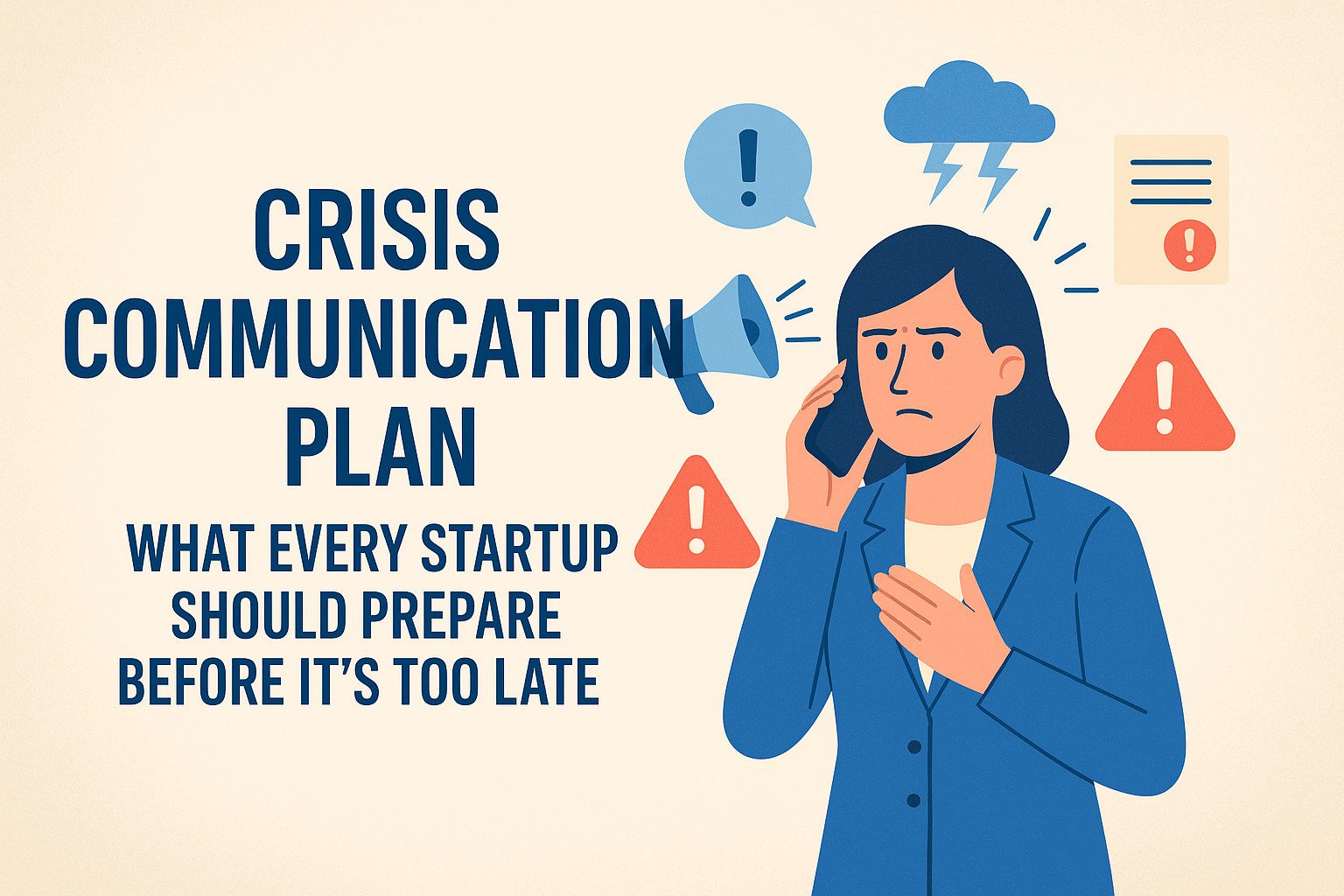
In the world of startups, speed is everything—but so is stability. A single tweet, server crash, or compliance failure can spiral into a full-blown PR crisis. Without a Crisis Communication Plan, startups risk losing customer trust, media reputation, and investor confidence in a matter of hours.
Whether you’re an early-stage founder or scaling rapidly, a clear crisis communication plan is not optional—it’s survival 101. In this blog, we’ll walk you through exactly what your startup should prepare before a crisis hits.
Why Startups Need a Crisis Communication Plan
Startups face unique challenges. Limited resources, lean teams, and rapid pivots often leave little time to plan for the worst. But crises don’t wait for your next funding round.
Here’s why a proactive crisis plan matters:
- Brand reputation can be destroyed in minutes.
- Investors and stakeholders demand accountability.
- Media scrutiny intensifies during negative events.
- Social media backlash spreads like wildfire.
A startup that communicates well during a crisis doesn’t just survive—it earns long-term trust.
What Counts as a Crisis for Startups?
Startups often underestimate what constitutes a crisis. It’s not just data breaches or legal issues. Common startup crises include:
- App/server downtime during peak hours
- Negative customer reviews going viral
- Product defects or recalls
- Founder’s controversial statements
- Misleading marketing claims
- Failed crowdfunding campaigns
- Layoffs, internal culture leaks, or harassment claims
Tip: If the issue can harm your reputation, shake user trust, or attract media attention—it’s a crisis.
Key Elements of a Strong Crisis Communication Plan
Here’s a framework every startup should implement—whether you’re in healthtech, edtech, fintech, or SaaS.
- Identify Potential Crisis Scenarios
Start by mapping out the most likely types of crises for your industry. This could include:
- Cybersecurity threats
- Compliance violations (especially in regulated sectors)
- Founder controversies
- Platform downtime
- Negative press or customer backlash
Use case: At Blue Buzz, startups are guided to run mock crisis drills to prepare their teams for high-pressure response scenarios.
- Build a Cross-Functional Crisis Team
Create a dedicated team that will handle any crisis—usually comprising:
- CEO or Co-Founder (for key public statements)
- Head of PR/Communications
- Legal Counsel
- Product/Engineering Lead (for tech crises)
- Customer Support Lead
Have roles defined in advance. Who approves external communication? Who handles media? Who monitors social chatter?
- Develop a Pre-Approved Messaging Template
Every second counts during a crisis. Prepare templates in advance for:
- Press releases
- Customer emails
- Social media statements
- Internal team notifications
Tone should be honest, transparent, and accountable. Never “wait to see” before drafting a response.
- Internal Communication First, Always
Before going public, communicate internally with employees. Your team should never hear crisis updates from Twitter or the news.
Send a Slack update or email outlining:
- What happened
- What the company is doing
- How employees should respond if contacted externally
Remember: Employees are unofficial brand ambassadors.
- Craft a Social Media Response Strategy
Social media is often where the crisis starts—or explodes. Have a plan for:
- Monitoring trending hashtags
- Pinning official statements
- Avoiding emotional or defensive replies
- Tracking sentiment via social listening tools
Blue Buzz recommends pre-assigning a social media lead to control the narrative calmly and proactively.
- Establish a Clear Media Protocol
Decide in advance:
- Who talks to the media?
- Will you do interviews or release only statements?
- What tone and message will you convey?
Train key spokespeople using media simulations. A single unprepared quote can deepen the crisis.
- Own the Mistake—Fast
The most trusted brands own their mistakes early and completely. Even if the details are unclear, acknowledge the issue.
Example template:
“We are aware of the issue and are actively investigating it. Transparency and trust are critical to us, and we’ll share updates as we know more.”
Never blame users or employees. Own the narrative.
- Provide Continuous Updates
During a crisis, silence is dangerous. Keep all stakeholders informed through:
- Live updates on your website
- Press or media briefs
- Scheduled email updates to customers
- FAQs or Help Center updates
Frequency matters more than perfection.
- Post-Crisis: Review and Rebuild Trust
Once the crisis is contained:
- Conduct a post-mortem to evaluate what went wrong
- Adjust processes and protocols
- Publish a “lessons learned” update if appropriate
- Resume positive storytelling—highlight improvements and user trust
Blue Buzz advises startups to rebuild trust through transparency, media collaboration, and community engagement.
Common Mistakes Startups Make During Crises
Avoid these reputation-killing missteps:
- Delaying communication
- Blaming others (users, vendors)
- Deleting negative comments
- Over-promising solutions
- Going silent under pressure
Startups don’t have the brand equity of large corporations. Mistakes like these are costlier and harder to recover from.
Final Thoughts: Be Ready Before It’s Too Late
Crisis communication is no longer a luxury for startups—it’s a necessity. Whether you’re bootstrapping or Series B funded, your brand’s survival depends on how fast and clearly you respond when things go wrong.
At Blue Buzz, we’ve helped dozens of startups create actionable crisis response playbooks. The best time to prepare is now—because tomorrow might already be too late.
Want Expert Help?
Need a ready-to-deploy Crisis Communication Plan tailored for your startup?
Reach out to the experts at Blue Buzz for PR strategies that protect your brand, build trust, and ensure your startup stays in control—even during chaos.
