
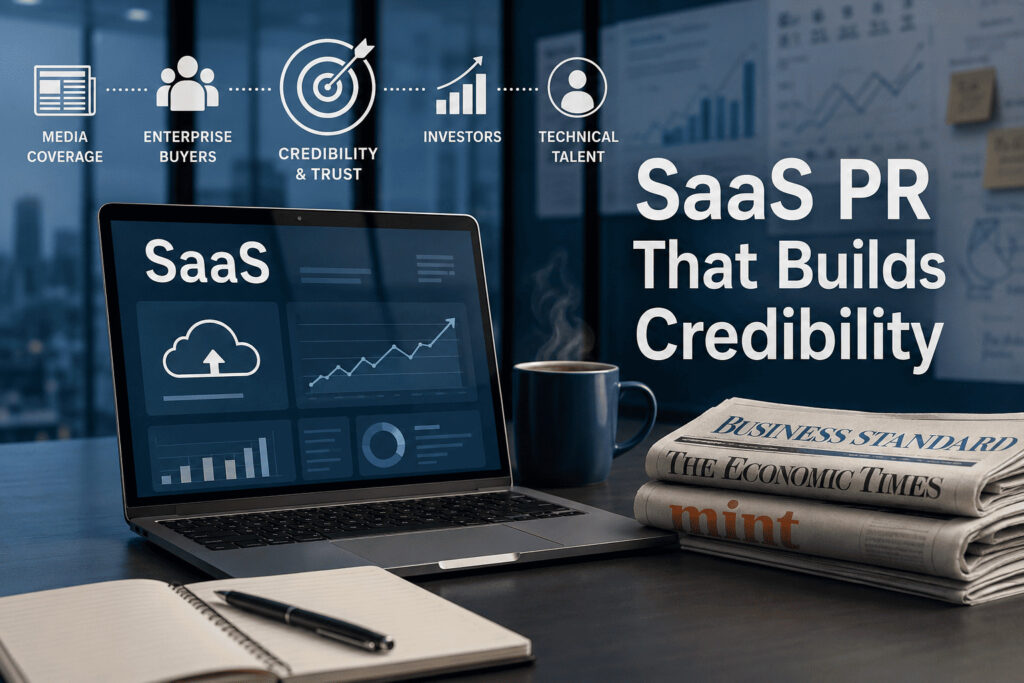
SaaS companies in India have a specific PR problem: the most important audiences for their business — enterprise buyers, investors, and technical talent — are not the audiences that most PR activity reaches.
A feature in a consumer supplement doesn’t move an enterprise procurement committee. A LinkedIn post that goes viral with general audiences doesn’t reassure a CTO evaluating your security architecture. SaaS PR works when it’s calibrated to the actual decision-making process of the people who buy B2B software, not to general visibility metrics.
The B2B SaaS buyer's media diet
Enterprise buyers in India who are evaluating software don’t read the same publications as general business audiences. They read sector-specific titles: CIO & Leader, CISO Magazine, Analytics India Magazine, TechCircle, and for finance and BFSI buyers, IBS Intelligence and similar sector publications. They read LinkedIn, specifically the content produced by practitioners and founders in their industry. They Google the company before responding to a sales email, and they check Clutch and G2 for reviews before moving past initial interest.
This means SaaS PR needs to operate across three channels that are quite different from each other: trade and sector media, founder-led LinkedIn content, and third-party review and directory platforms. Coverage in Economic Times is useful for investor and employee brand signalling, but it rarely moves an enterprise procurement decision on its own.
What makes a SaaS PR story
The stories that work for B2B SaaS companies in India fall into five categories:
Customer outcomes with numbers.“Our platform reduced manual reconciliation time by 60% for a leading private sector bank” is a story. “Our platform helps enterprises streamline their workflows” is not. Customer permission to share specific data is the constraint; when you have it, use it as specifically as possible.
Category creation or market sizing. If your company is defining a new category — not just a better version of an existing product — that narrative belongs in media. “Why enterprise identity management in India is broken, and how we’re fixing it” is a piece a tech journalist will consider. It’s also a piece that positions you as the category leader before the category has a leader.
Funding announcements tied to a market thesis. Not just “we raised X,” but “we raised X because the Indian SME ERP market is underserved at this price point, and here’s the data.” The market thesis gives journalists something to write about beyond the number.
Research and data. Proprietary research — a survey of 100 CIOs, an analysis of enterprise software adoption rates — is among the most durable PR assets a SaaS company can produce. It generates coverage, establishes expertise, and becomes a reference source that others link to. It also positions your company as the authority that understands the market, not just the vendor selling into it.
Leadership commentary on sector trends. Responding to industry news, regulatory changes, or technology shifts with specific, informed commentary gets founders quoted in ongoing sector coverage. This requires consistent monitoring and fast turnaround — most good media opportunities are 24 to 48 hours wide.
The mistake that kills SaaS PR momentum
The most common failure mode for SaaS companies investing in PR is treating it as a launch activity. They invest heavily around a product launch or funding round, generate a spike of coverage, and then go quiet. Six months later, the coverage has faded and the Google trail shows a company that peaked and stopped.
Enterprise buyers notice this. A company with consistent, current media presence — even light coverage, one or two stories per quarter — signals stability and momentum. A company with three stories from 18 months ago and nothing since raises questions about whether it’s still active and growing.
The cadence that works is not a spike every nine months. It’s a steady drumbeat: one or two meaningful stories per quarter, consistent founder LinkedIn activity, and a customer case study published every six months.
Timelines for SaaS PR in India
First credible coverage: four to eight weeks from the start of an agency engagement, assuming a news peg (funding, launch, or a strong customer story).
First tier-1 coverage: three to five months. Relationships with journalists at Economic Times, Mint, and Business Standard take time to develop. Shortcuts don’t exist; credibility with those desks is built through consistent pitching, accurate story development, and making journalists look good with their editors.
Recognisable brand in sector media: six to twelve months of consistent effort. At that point, journalists begin reaching out proactively for comment on sector stories, which shifts the dynamic from push to pull.
Frequently Asked Question
Is PR different for horizontal vs. vertical SaaS in India?
Yes. Horizontal SaaS (products that work across industries) needs broader business media coverage. Vertical SaaS (products built for one sector) should concentrate on that sector’s trade publications and events, where the buyer is.
How do product launches work for SaaS companies without a PR hook?
Not every product update is a media story. Reserve PR investment for releases that solve a new problem or enter a new market. Internal product updates belong on the company blog and LinkedIn, not in a press release.
Should SaaS companies use wire services for press releases?
Wire distribution (PTI, ANI) is worth using for funding announcements and major product milestones. For feature releases or partnership announcements, direct journalist outreach typically produces better coverage than wire distribution.
