
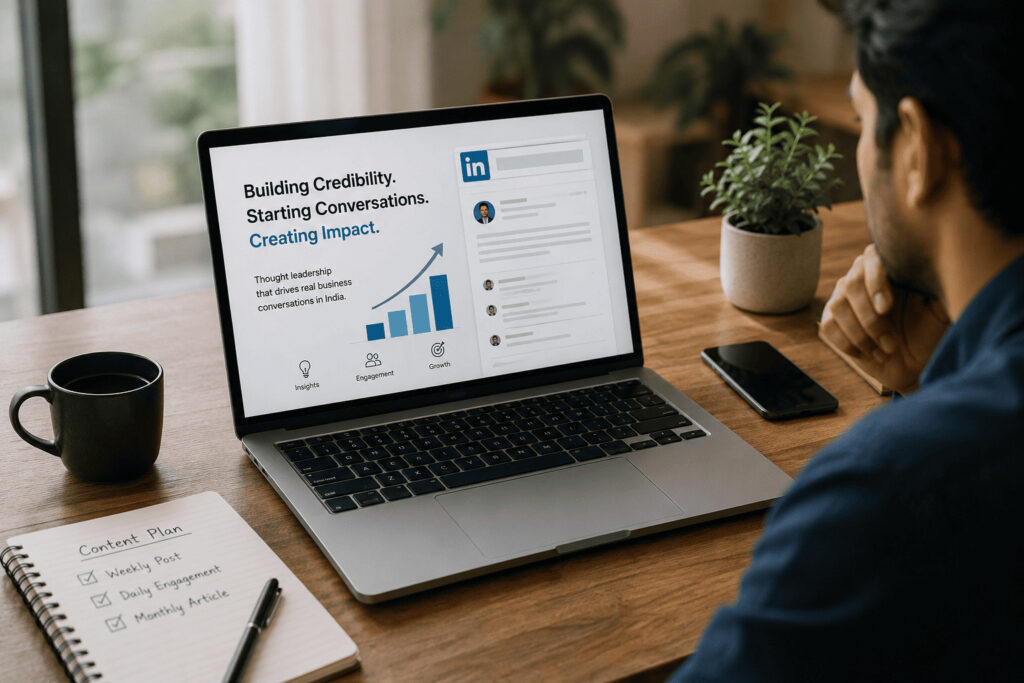
LinkedIn thought leadership for Indian founders has a problem. The content that performs well on the platform — the vulnerable personal story, the numbered listicle, the “here’s what 10 years taught me” post — is often the content that builds the least real credibility with the people who matter most: enterprise buyers, investors, and potential senior hires.
A post that gets 10,000 likes from a general audience does not move a procurement committee. A post that three relevant decision-makers read, remember, and mention in a meeting does.
The goal of founder thought leadership is not reach. It is the right reputation with the right people.
What thought leadership actually does for a founder
Done correctly, a consistent LinkedIn presence achieves three things that no amount of advertising or PR can replicate:
It creates a searchable track record. Every senior enterprise buyer, investor, or journalist who hears about your company will look you up on LinkedIn before responding to an email or taking a meeting. What they find — or don’t find — shapes their first impression before you’ve said a word.
It generates inbound at the right level. Founders with a credible, consistent LinkedIn presence report that the quality of inbound conversations changes: fewer cold inquiries, more qualified introductions, more journalists reaching out for comment on sector stories they’re already writing.
It shortens sales cycles. When a prospect arrives at a sales conversation already familiar with how you think about the problem, the first 20 minutes of every meeting change. You’re not establishing context — you’re having the deeper conversation.
The content system that works
Most founders fail at LinkedIn not because they have nothing to say, but because they have no system for saying it consistently. Here is a repeatable structure:
One anchor post per week. This is a 150 to 300-word post on something specific to your sector — a trend you’re seeing, a misconception you keep encountering, a data point that surprised you. It must contain a specific observation, not a general statement. “AI adoption in Indian enterprise is slower than the headlines suggest” is a general statement. “Three of our last five enterprise prospects had already bought an AI tool they weren’t using — here’s why” is a specific observation. The second one earns comments from people who want to talk further.
One engagement block per day. Fifteen to 20 minutes of deliberate commenting on posts by people in your target audience — enterprise buyers, sector journalists, investors, fellow founders in adjacent spaces. Not “great post!” comments, but one or two sentences that add something to the conversation. This is the unsexy work that makes the algorithm show your posts to the right people.
One longer-form piece per month. A 600 to 900-word article on a topic where you have genuine expertise — something specific enough that only someone with your experience could have written it. Sector analysis, a counterintuitive take on a trend, a behind-the-scenes account of a business decision. These are the pieces that get shared, cited, and remembered.
What not to do
Don’t post about your company’s product constantly. One in five posts can reference your company or a client outcome. More than that reads as advertising, not thought leadership.
Don’t use ghostwriters who don’t know your sector. A ghost who produces clean, well-structured generic posts in your name builds a following of the wrong people and erodes your authenticity with the right ones. A good writing partner helps you extract and express your own thinking — they don’t replace it.
Don’t chase virality.“What nobody tells you about building a startup in India” with a dramatic personal story may go viral. It will attract a large audience of people who are not your buyers. The time spent managing that engagement is rarely worth the business outcome.
Don’t be consistent for three weeks and then disappear. The algorithm deprioritises accounts that go quiet. More importantly, buyers who were beginning to recognise your name lose the thread. One post per week for 52 weeks builds more than ten posts in a burst followed by silence.
How long before it works
With one solid post per week and daily engagement, most founders see a meaningful change in LinkedIn-sourced conversations within three to four months. The inflection point — where people start tagging you in relevant conversations, where journalists reach out because they’ve seen your name consistently — usually comes around month six to nine.
It is slower than advertising and faster than most founders expect if they stay consistent.
Frequently Asked Questions
Should a founder use their personal profile or the company page?
Personal profile, primarily. Company page content gets dramatically lower organic reach than personal posts. The company page matters for SEO and legitimacy, but the founder’s personal profile is where real engagement happens.
How do you handle negative comments or criticism?
Acknowledge specific points that are valid, correct specific factual errors, and ignore general hostility. Engaging defensively with critics on a public thread never ends well.
Is LinkedIn relevant for B2B sales in all sectors?
In technology, professional services, education, BFSI, and healthcare, yes — LinkedIn is where buying decisions are researched and relationships are initiated. In consumer and FMCG, Instagram and other platforms may matter more for brand building, but LinkedIn remains the primary channel for enterprise and institutional conversations.
